
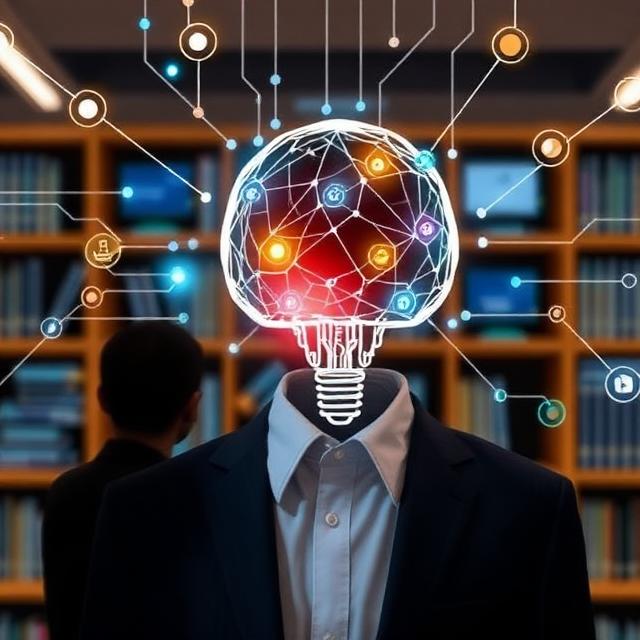
The Classroom Revolution: How AI is Transforming Education
The image of a traditional classroom—one teacher standing in front of thirty students with a single textbook—is rapidly fading. In 2026, Artificial Intelligence has moved from being a high-tech novelty to the essential “co-pilot” of modern education. By personalizing the learning experience and automating administrative burdens, AI is making quality education more accessible and effective than ever before.
1. The Power of Personalised Learning
For decades, the “one-size-fits-all” approach to teaching meant that some students were bored while others were left behind. AI has changed this dynamic through Adaptive Learning.
- Tailored Pacing: AI platforms analyze how a student interacts with a lesson in real-time. If a student struggles with a math concept, the AI provides extra practice and simpler explanations. If they master it quickly, the system moves them to the next challenge.
- 24/7 Support: AI-powered tutors are available at any hour to answer questions, provide hints, and guide students through homework without simply giving away the answers.
2. Empowering Educators, Not Replacing Them
A common fear was that AI would replace teachers. Instead, it is acting as a powerful Administrative Assistant.
- Grading and Feedback: AI can now handle routine grading of multiple-choice tests and even provide initial feedback on essays, allowing teachers to focus on deep mentoring and complex human discussions.
- Lesson Creation: Teachers are using AI to generate creative lesson plans, quizzes, and multimedia presentations in seconds, freeing up hours of time every week.
3. Breaking Barriers to Accessibility
AI is a massive equalizer for students who face physical or cognitive challenges.
- Real-time Translation: In diverse classrooms, AI can translate a teacher’s speech into a student’s native language instantly, ensuring no one is left out due to a language barrier.
- Assistive Tools: For students with visual or hearing impairments, AI-driven tools convert text to speech or describe visual images, providing a level of independence that was previously impossible.
4. The Rise of Immersive Learning
Learning is no longer confined to 2D pages. AI, combined with Virtual Reality, allows students to go on “virtual field trips.”
- History Reimagined: Imagine standing in the middle of ancient Rome or witnessing a historical speech as if you were there.
- Virtual Labs: Students can conduct complex science experiments in a safe, digital environment, exploring chemistry or physics without the need for expensive equipment or physical risks.
5. Navigating the Challenges
While the benefits are vast, the transformation of education requires careful handling.
- Critical Thinking: As AI becomes better at generating answers, schools are shifting their focus from memorising facts to analysing them. The goal is to teach students how to ask the right questions and verify the information they receive.
- Human Connection: No machine can replace the emotional support, inspiration, and moral guidance provided by a human teacher. The future of education lies in the perfect blend of high-tech tools and high-touch human interaction.
The Bottom Line: AI is turning education into a truly individual journey. By taking over the repetitive tasks and tailoring content to the learner, it allows both students and teachers to focus on what humans do best: stay curious, be creative, and think critically.