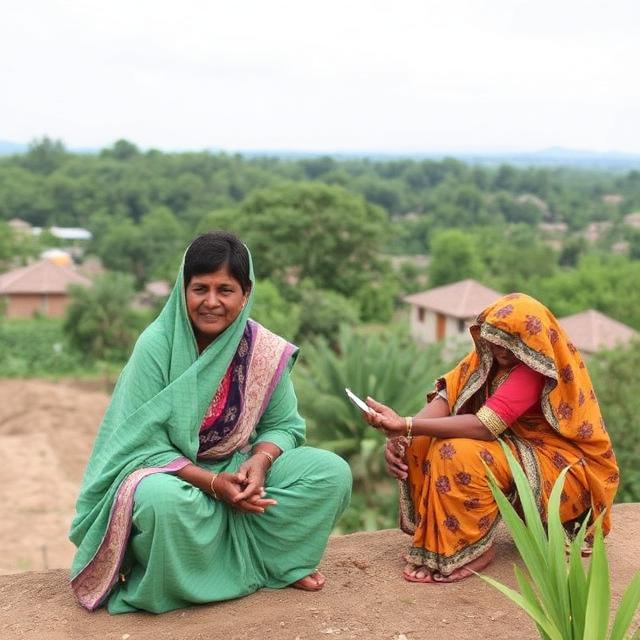
For decades, the standard model of rural development was “top-down”: experts in cities designed solutions for problems they had never lived. At Vayam, we flipped the script. We realized early on that the most sustainable solutions aren’t brought to a village; they are unearthed from it.
Working within the tribal blocks of Maharashtra, we’ve gathered critical lessons on what it actually takes to shift power back to the people. Here is what “Community-Led” really looks like in the field.
1. Governance Must Be Granular (The ‘Pada’ Principle)
The biggest lesson we’ve learned is that “Centralized” is often synonymous with “Invisible.” When a Gram Panchayat covers five different villages, the smallest hamlets (Padas) are often left behind.
- The Lesson: Real democracy happens at the doorstep. By helping hamlets notify their own independent Gram Sabhas under the PESA Act, we ensure that the people who drink from a specific well are the ones deciding how to fix it.
- The Vayam Way: We don’t lead the meeting; we sit in the back. Our role is to ensure the villagers know the rules of the game so they can play it themselves.
2. Rights-Based Awareness Over Charity
Charity creates a cycle of waiting; rights-based awareness creates a cycle of doing. If you give a family a bag of grain, they eat for a month. If you help them secure their Forest Rights Act (FRA) title, they own the means to feed themselves for generations.
- The Lesson: Legal literacy is the ultimate “fishing pole.” When a farmer understands that the land they till is legally theirs, their entire psychological relationship with the soil changes from “survival” to “investment.”
3. Indigenous Wisdom is Technical Expertise
We often encounter “experts” who want to introduce exotic crops to tribal regions. We’ve found that the communities already have the answers—they just need the platform to execute them.
- The Lesson: Traditional knowledge regarding forest produce, local grains, and water conservation is scientifically sound. Our ‘Su’poshan (Nutrition) and Jal Swaraj (Water) programs succeed because they build upon local seeds and ancestral mapping of water streams.
4. The Youth as Catalysts, Not Just Beneficiaries
In many NGOs, “Youth” is a category to be served. At Vayam, the youth are the Field Volunteers.
- The Lesson: Change moves at the speed of trust. By training local tribal youth to navigate government portals, document land claims, and lead MGNREGA “Work Demand” drives, we ensure the expertise stays in the village long after the “project” ends.
5. Persistence is the Only Shortcut
Policy change and social shifts don’t happen in a single funding cycle. It took years of advocacy to ensure that distress migration was recognized not as a choice, but as a failure of local work availability.
- The Lesson: You have to be willing to stay. Community-led development is slow because it requires a fundamental shift in mindset—moving from “I am a beneficiary” to “I am a citizen.”
The Verdict: ‘Vayam’ is a Verb
At Vayam, we have seen that when a community stops waiting for a savior, the “problems” start becoming “projects.” Community-led development isn’t just a methodology; it’s a realization that “We” (Vayam) are the ones we’ve been waiting for