
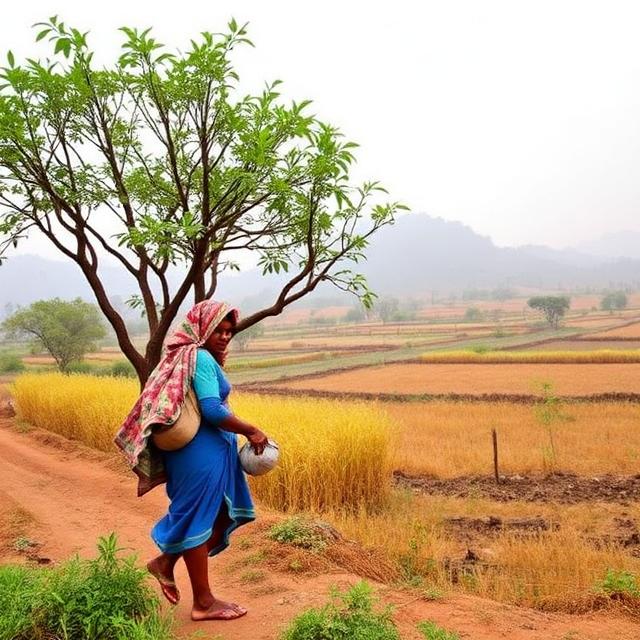
For decades, the story of rural India was told through the lens of “relief”—subsidies, grants, and seasonal support. But in 2026, the narrative is shifting from survival to sustainability. To truly reimagine rural India, we must move beyond temporary fixes and build ecosystems where livelihoods are resilient, localized, and future-proof.
At Vayam, we believe that sustainable livelihoods aren’t just about providing a job; they are about fostering agency—giving people the tools, the skills, and the collective power to drive their own economic destiny.
1. From Agriculture to Agri-Entrepreneurship
Traditional farming is facing the dual heat of climate change and fragmented landholdings. The pathway to sustainability lies in value addition.
- Localized Processing: Instead of selling raw produce at volatile market prices, rural collectives are being trained in food processing, packaging, and direct-to-consumer branding.
- Climate-Smart Tech: Implementing IoT-based soil testing and solar-powered irrigation doesn’t just save resources; it creates high-skill “green jobs” within the village itself.
2. The Power of the Collective (FPOs and SHGs)
Individual farmers or artisans often lack the scale to negotiate with big markets. The reimagined rural landscape is built on Collectivization.
- Vayam’s Approach: By strengthening Farmer Producer Organizations (FPOs) and Self-Help Groups (SHGs), we transform scattered workers into powerful economic blocks. This “strength in numbers” allows for better access to credit, shared technology, and higher bargaining power.
3. The Digital Village: “Work from Anywhere”
High-speed internet is the new highway. Sustainable livelihoods now include digital services that don’t require migration to a city.
- Nano-Service Hubs: Rural youth are being skilled in digital bookkeeping, e-commerce management, and remote data entry, allowing them to earn urban wages while staying rooted in their communities.
- Preserving Heritage: Digital platforms are allowing traditional artisans to sell to global markets, ensuring that ancient crafts provide a modern, sustainable income.
4. Investing in “Community Agency”
Sustainability fails when it is “top-down.” True resilience is built when the community owns the process.
- Capacity Building: At Vayam, our core mission is carving leadership out of the grassroots. When a village leader understands how to navigate government schemes and private partnerships, the entire community’s livelihood security increases.
- Circular Economies: By promoting local production for local consumption, villages can reduce their dependence on external supply chains, keeping wealth circulating within the rural ecosystem.
The Verdict: Reimagining rural India isn’t about making villages look like cities. It’s about ensuring that a young person in a village has the same economic security and opportunity as someone in a metro, without having to leave their home behind.