
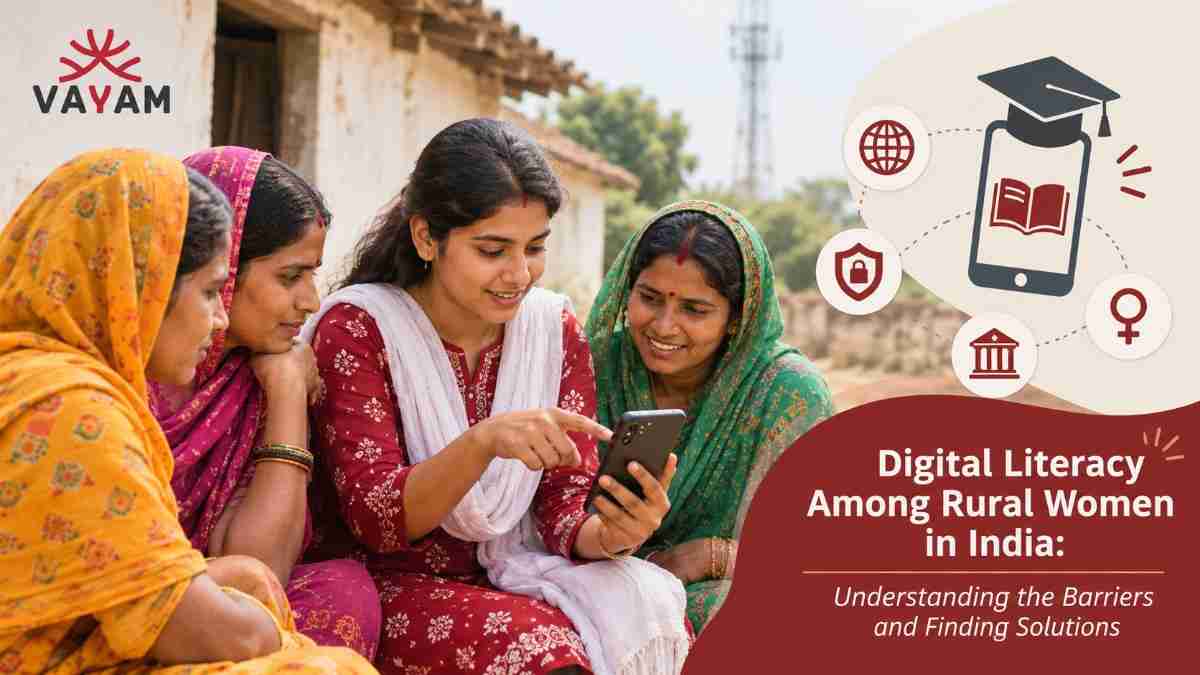
Mobile phones and internet provision have allowed people to carry out various tasks such as managing money, communicating and engaging with the government. Nonetheless, not everyone can engage equally with digital technology. Within rural India even if a woman has access to a smartphone in her house, she often still relies on other family members to digitally engage on her behalf.
Whilst a woman may be competent at utilising mobile phones for both calling and sending messages, she may lack knowledge about online banking, electronic payments and even online government services. Thus, simply having a mobile phone does not always equate to a person having the skills to utilise it.
As such, digital literacy is a key element in educating and economically engaging women.
The Digital Gender Gap in India
Differing levels of internet usage between men and women continue to be an issue. Around 33% of women and 57% of men aged 15-49 have used the internet in the last five years (NFHS-5, 2019-21).
Digital inclusion can be especially problematic in more rural areas. Alongside issues relating to availability of both equipment and internet provision there is often a lack of digital skills. It is therefore essential that alongside supplying people with mobiles, there are also provision for women to both understand and utilise a range of digital services, in a safe manner.
What Prevents Rural Women from Using Digital Technology?
No single reason explains why women have limited access to digital services. Their circumstances often involve a combination of financial, educational and social barriers.
Limited access to personal devices
In many households, a smartphone is shared among family members. Women may have to wait until someone else is available to use it, making regular practice difficult. Without access to their own devices, learning digital skills becomes more challenging.
Cost of smartphones and internet services
For families managing limited incomes, purchasing a smartphone and paying for data services may not be a priority. The additional cost of repairs and maintenance can also discourage regular use.
Language and education barriers
Many digital platforms contain instructions and information that can be difficult to understand for users with limited literacy or familiarity with English. This can prevent women from completing simple tasks without assistance.
Social and family restrictions
In certain communities, women may face restrictions on when and how they can use mobile phones. Concerns about online safety and social expectations can further limit their access.
Fear of online fraud
Unfamiliarity with digital payments, suspicious links, and online scams can make women hesitant to use financial services through their phones. Without proper guidance, even basic online activities may seem risky.
How Limited Digital Skills Affect Everyday Life
The inability to use digital services independently can affect several aspects of women’s lives. Poor digital skills can impact on a woman’s life in different ways.
Many government services are now also provided digitally. Information is available online for example, regarding pension, welfare, and financial support. Where women lack digital skills, they may need to ask somebody else to both source and process information for them.
In addition, digital technology can support financial autonomy. Women can view, save and be paid via digital methods. Furthermore, women who are self-employed can utilise digital technology to market themselves to people outside of their local area.
Good quality digital information is also available relating to health, diet, pregnancy and immunisation. Women can then use this information to further inform their own and their family’s choices.
Making Digital Literacy Training More Useful
Training programmes should be designed around activities that women actually need to perform. Instead of focusing only on how to operate a smartphone, sessions should provide practical experience with commonly used digital services.
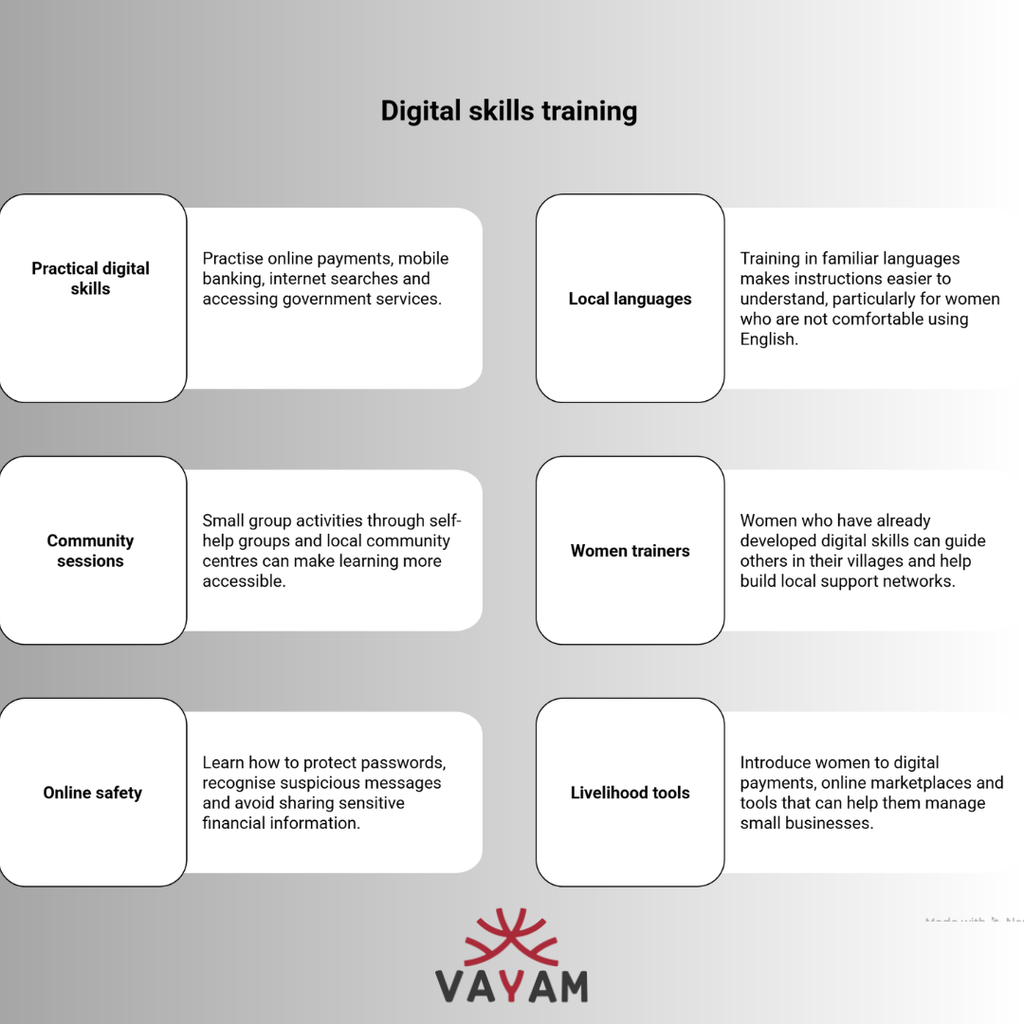
Some approaches that can make these programmes more effective include:
- Digital literacy
Women should be able to practice digital skills including how to pay for goods and services online, use a bank app and search for and utilise online information and public services.
- Local languages
As well as being easier to understand, training in a woman’s preferred language is especially suitable for those less confident in English.
- Community provision
Small group sessions can be run via both self-help and community-based settings. This is a good way of providing training.
- Training by women
Those within a village who have obtained digital skills can train others. Women can therefore also strengthen local community links.
- Online safety
It is essential that people are trained in how to keep their passwords secure and identify fraudulent communications. In addition, they should know how to refrain from disclosing confidential financial data.
- Relating digital skills to employment
Teaching about online payments is a good practice, as is teaching women how to utilise digital technology for trading on the internet and for managing small enterprises.
The Role of NGOs in Improving Digital Inclusion
NGOs can provide training to overcome digital inequality. They may offer instruction on phone use, digital financial skills and how to engage with online resources.
Alongside self-help, community and local training bodies, NGOs can widen provision so that more women can engage with training. Furthermore, alongside teaching, organisations can promote a culture where individuals build up and then disseminate their own digital skills on an ongoing basis.
Further to teaching, consideration must also be given to how women can continue to apply their newly gained digital skills.
Women will typically require their own technology, reasonable priced internet access and further support in order to effectively and independently utilise their digital skills.
Moving Towards Greater Digital Inclusion
Women can benefit from increased digital literacy as it can allow for greater access to information and access to financial and other facilities. Again, this can only occur if women can not only access technology, but also feel confident to utilise it.
Continual involvement from NGOs, local bodies and the community can further develop digital skills within rural areas. Together with appropriate teaching, reasonable cost and community support, more women can be encouraged to develop good digital skills.
Whilst raising awareness is an important part of developing digital skills, it is also key that women can apply these skills in their day-to-day lives.
What does digital literacy mean for women in rural India?
Digital literacy enables women to use smartphones, internet services and digital platforms independently. It includes skills such as online banking, digital payments, accessing government services and finding reliable information.
What are the essential digital skills women need to learn?
Some important skills include operating smartphones, using internet browsers, sending emails, making digital payments, accessing online government services, identifying online fraud and protecting personal information.
Why is digital literacy important for women’s empowerment in India?
Digital literacy helps women access education, healthcare information, financial services and livelihood opportunities. It also allows them to manage everyday tasks with greater independence.
What are the major barriers to digital inclusion among rural women?
Limited access to personal smartphones, internet costs, language barriers, low digital awareness, social restrictions and concerns about online fraud are some common challenges.
How can NGOs improve digital literacy among rural women?
NGOs can organise practical training sessions, provide guidance in local languages, work with self-help groups and train local women to become digital literacy educators.
What are the key components of a digital literacy programme?
An effective programme should cover basic device operation, internet usage, digital communication, online financial transactions, information literacy and cybersecurity awareness.
How does digital literacy help women become financially independent?
It allows women to use mobile banking, receive digital payments, access financial information and promote their products through online marketplaces.