
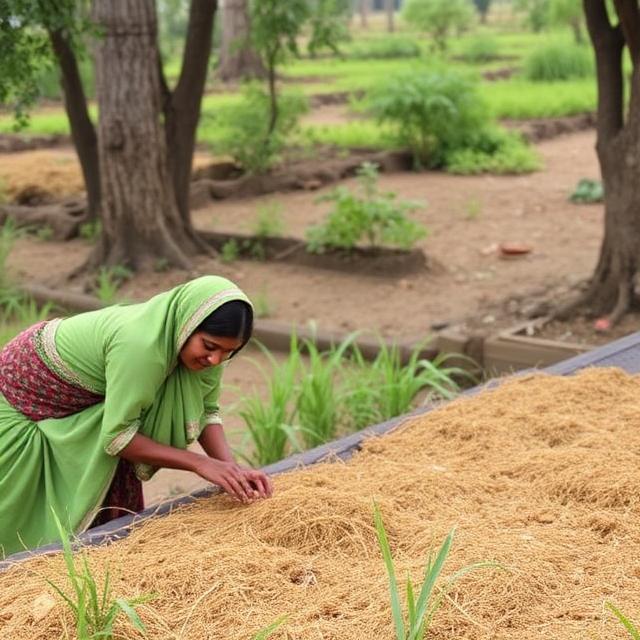
For over two decades, MGNREGA has been the safety net for rural India. However, the 2026 Union Budget has signaled a historic transition toward Viksit Bharat – Gramin Resource Augmentation & Management (VB-G RAM G).
At Vayam, we have tracked these shifts from “intent to execution.” This evolution represents a move from mere wage employment to the creation of durable, high-tech assets in every village. Here are the five most critical changes every rural stakeholder must understand:
1. The Asset-Quality Mandate
In the past, rural works often focused on “unskilled” labor like pit digging. The new VB-G RAM G framework mandates that 60% of all works must now focus on permanent infrastructure—such as solar-powered cold storages and micro-irrigation systems.
- Vayam’s Insight: Our process evaluation models show that permanent assets reduce long-term poverty by 15% more than temporary wage work.
2. AI-Linked Skill Credits
The 2026 budget introduces “Skill Credits” for informal workers. Laborers can now earn “Digital Credits” while working on government projects, which can be redeemed for vocational training via SehajAI, our WhatsApp-based AI chatbot.
3. Direct Benefit Transfer 2.0 (DBT-E)
To eliminate “leaks,” payments are now linked to Geofenced Proof of Work. AI algorithms verify that a task is completed through satellite imagery before the Aadhar-Enabled Payment System (AEPS) triggers the transfer.
4. Focus on “Circular” Rural Waste
A significant portion of the 2026 rural budget is carved out for Rural Waste Management. Villages are being incentivized to turn agricultural waste into bio-CNG and organic compost, creating new revenue streams for Self-Help Groups (SHGs).
5. Technical Continuity in Implementation
With more complex infrastructure being built, the government is adopting the Vayam Model of Technical Resilience. This ensures that technical oversight is system-centric, meaning a project’s engineering and data logs are archived so that local personnel changes do not stall progress.
Frequently Asked Questions (FAQs)
1. Is MGNREGA being closed down?
No, it is being upgraded. The core promise of 100 days of work remains, but the type of work is shifting toward high-value, climate-smart infrastructure.
2. What is VB-G RAM G?
It stands for Viksit Bharat – Gramin Resource Augmentation & Management. It is the 2026 evolution of rural employment schemes, focusing on digital tools and permanent asset creation.
3. How can a rural worker access “Skill Credits”?
Workers are automatically enrolled through their Aadhar-linked Farmer/Laborer IDs. Credits are earned for every 30 days of completed work.
4. What role does SehajAI play in the new budget?
SehajAI is a conversational AI tool that helps marginalized communities understand these new budget changes and apply for schemes in their local language.
5. How does Vayam help in monitoring these changes?
We provide data-driven insights to government agencies, helping them track whether these new funds are actually reaching the last-mile beneficiaries.
6. Can SHGs participate in waste management projects?
Yes. The 2026 budget provides dedicated grants for SHGs to set up and manage bio-composting units in their villages.
7. What is “Geofenced Proof of Work”?
It is a security measure where an app confirms the worker’s GPS location and the project’s completion photo before releasing payments.
8. How do I appeal a rejected application under the new system?
You can use the Digital Grievance Portal or visit a local Common Service Center (CSC) to file an appeal.
9. Why is technical documentation important for village projects?
It ensures that if a Junior Engineer or Pradhan changes, the new lead has the complete technical history of the project to ensure its completion.
10. Where can I find the full 2026 Union Budget for rural development?
You can access the official documents at the Ministry of Rural Development or read our simplified summary on the Vayam Blog.