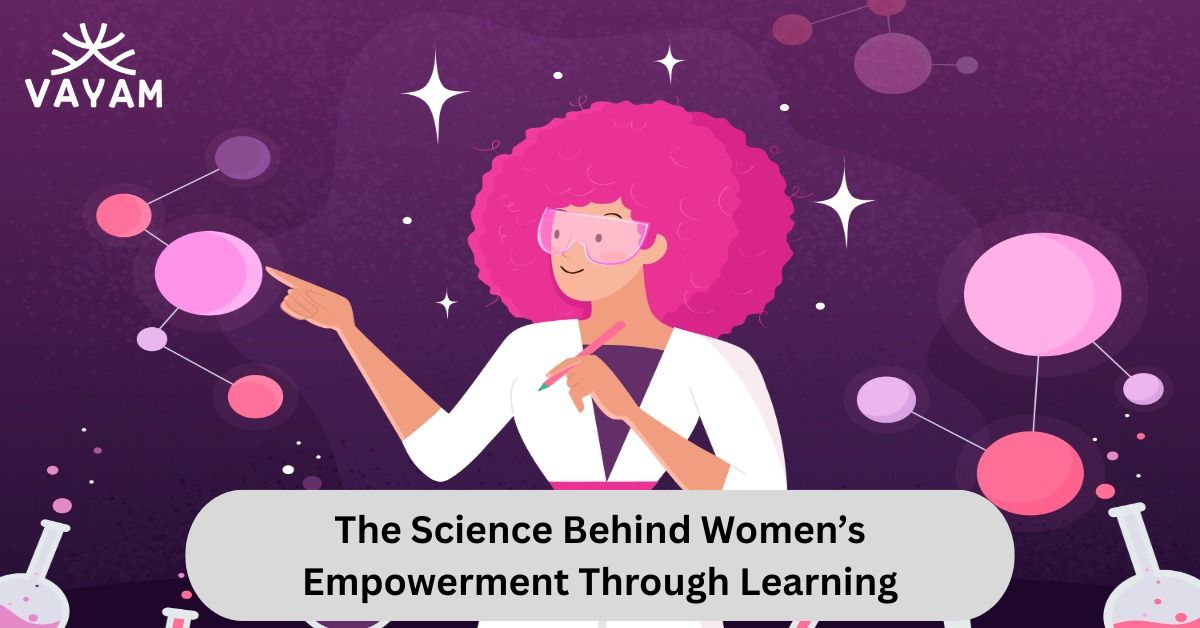
Have you ever felt stuck in a job that doesn’t value you, or held back because you didn’t have the right skills at the right time? You’re not alone. Millions of women around the world face the same quiet frustration every single day. The good news? Learning – real, intentional learning – changes everything. And it’s not just feel-good advice. There’s actual science that shows why picking up new knowledge and skills is one of the most powerful ways a woman can take control of her life.
Let’s talk about what really happens in your brain, your career, and your confidence when you decide to keep learning. No jargon, no fluff – just the facts, mixed with stories most of us can relate to.
Your Brain Literally Rewires Itself When You Learn
Remember the last time you finally understood something you’d been struggling with – maybe a new software at work, a language app, or even how to read a financial statement? That “aha!” moment wasn’t random. Scientists call it neuroplasticity: your brain’s ability to form new connections and pathways well into adulthood.
Studies from places like Harvard and Stanford keep proving the same thing: women who regularly learn new things show stronger neural connections in areas linked to problem-solving, memory, and emotional regulation. In simple terms? The more you learn, the better your brain gets at handling stress, making decisions, and spotting opportunities others miss.
One study followed women who took online courses while working full-time. After just 12 weeks, brain scans showed increased activity in the prefrontal cortex – the part that controls planning and self-control. These weren’t teenagers; most were in their 30s and 40s. Your brain doesn’t care how old you are. It rewards effort.

Breaking the Confidence Gap, One Skill at a Time
We’ve all heard about the confidence gap between men and women. Research from the American Psychological Association shows women consistently rate their abilities lower than men do – even when their performance is identical.
When you master something new (coding, public speaking, budgeting, negotiation, whatever it is), you collect undeniable proof that you’re capable. Psychologists call this “self-efficacy” – the belief in your own ability to succeed. Every certificate you earn, every project you finish, every time someone says “How did you do that?” chips away at impostor syndrome.
A few years ago, a friend of mine – let’s call her Sarah – was passed over for promotion three times. She was furious, but also secretly thought, “Maybe they’re right. Maybe I’m not ready.” Instead of giving up, she started taking evening classes in data analysis. Six months later she walked into her boss’s office with a dashboard that saved the company thousands of dollars a month. She got the promotion – and a 30% raise. The skill gave her the proof. The proof gave her the courage to ask.
The Pay Gap Starts Closing When the Skills Gap Closes
Let’s be honest about money. Women still earn less than men for the same work in most countries. Part of that is bias (which is real and unfair), but part of it is the skills gap in high-paying fields.
McKinsey’s research shows that jobs requiring advanced digital skills pay 40-60% more – and women are underrepresented in those roles. The fastest way to close your personal pay gap? Learn the skills companies are desperate for right now: data analysis, digital marketing, cloud computing, project management, even basic AI prompting.
I’m not saying it’s fair that we have to work harder to get paid fairly. I’m saying it works. Thousands of women have doubled their income in under two years by learning in-demand skills online – often for free or low cost.

Learning Gives You Options (And Options Are Power)
One of the biggest hidden pains for many women is feeling trapped. Trapped in a bad marriage because “I can’t support myself.” Trapped in a toxic workplace because “I don’t have anywhere else to go.” Trapped in a town because “I don’t have the qualifications to move.”
Every new skill you add is a door you open. It’s an escape hatch. It’s freedom in your back pocket.
A woman I know left an abusive relationship at 42 with two kids and zero savings. She spent evenings learning medical billing from free YouTube videos while her kids slept. Within a year she had a remote job paying $55,000 a year – more than her ex ever made. Learning didn’t just change her income; it changed her choices.
How Motherhood Actually Makes You a Better Learner?
Society loves to act like having kids kills your brain cells. Science says the opposite. Pregnancy and early motherhood cause massive changes in brain structure – especially in areas linked to empathy, multitasking, and long-term planning. Researchers at the University of Barcelona found that mothers actually show enhanced brain activity in regions tied to learning and memory for years after giving birth.
Translation: you’re not “losing your edge.” Your brain is quietly becoming a superpower – if you feed it new information.

Why Online Learning Fits Women’s Lives Better Than Traditional School Ever Did?
Let’s be real – most universities weren’t designed for women who are also raising kids, caring for parents, or working full-time. Online courses were.
You can learn at 10 p.m. after the kids are asleep. You can pause a video when someone needs a glass of water. You can spend three months on one course instead of three years on a degree. Platforms like Coursera, edX, LinkedIn Learning, and freeCodeCamp let you earn credentials from Google, IBM, and top universities without ever leaving your house.
A 2023 study showed that women complete online courses at higher rates than men – because the format finally works with our lives instead of against them.
The Community Effect: You Don’t Have to Do It Alone
Here’s something people rarely talk about: women who learn together move faster.
When you join a study group, a Discord channel, or even a WhatsApp group of women learning the same skill, magic happens. You get accountability on days you want to quit. You get someone to explain the part that’s confusing you. You get job leads before they hit the public market.
I’ve watched women who started as strangers in a 6-week bootcamp end up co-founding companies, referring to each other for six-figure roles, and celebrating each other’s wins like family.
Simple Ways to Start (Even If You’re Busy and Broke)
You don’t need money or huge chunks of time to begin. Here’s what actually works:
- Start with 15 minutes a day. Seriously, that’s enough to finish most micro-courses.
- Use free resources first: Google’s certificates, freeCodeCamp, YouTube channels like Traversy Media or The Net Ninja.
- Pick one skill that pays well and interests you at least a little (you’ll stick with it longer).
- Tell one friend what you’re doing – accountability doubles completion rates.
- Put your new skill on your LinkedIn and resume the day you finish, even if it’s just a small project.

The Long Game: What Learning Does That Nothing Else Can
Money comes and goes. Jobs come and go. But the ability to learn? That’s the one skill that keeps paying dividends for your entire life.
Every decade brings new technology, new rules, new opportunities. The women who thrive aren’t always the ones who knew the most at 22. They’re the ones who never stopped adding to what they know at 32, 42, 52, and beyond.
Read More
Top 5 Online Skill Courses That Empower Women to Earn from Home

5 Career-Boosting Skills for Women in 2026: Your Roadmap to Professional Success

Why Top Corporate Leaders Invest in Women’s Skill Programs
You’re Not “Behind”
If you’re reading this and thinking “I should have done this years ago,” stop. The best time to start was yesterday. The second-best time is right now.
Every expert you admire started as a beginner who felt overwhelmed. The difference is they kept going anyway.
Your brain is ready. The tools are cheaper and better than ever. Women just like you are quietly rewriting their stories every single day through learning.
So pick one thing. Just one. Open a tab, sign up for a free course, watch the first video.
Because the science is clear: when women learn, we don’t just change our lives.
We change what’s possible.