
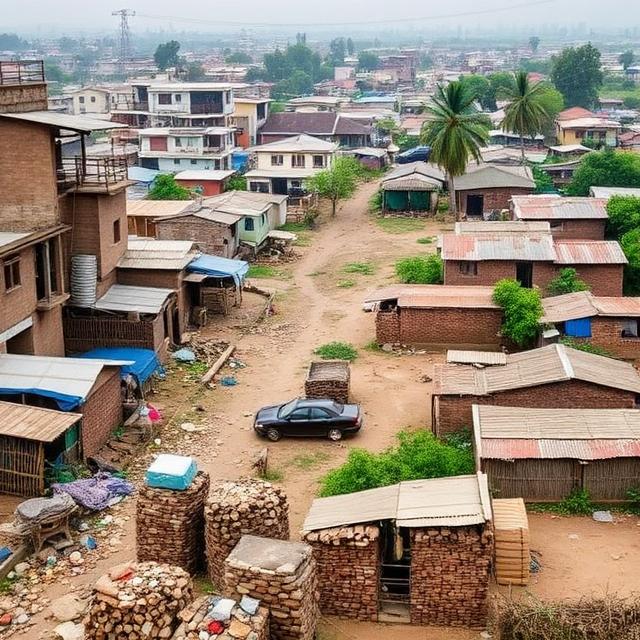
In the development sector, we often speak of “Rural India” and “Urban India” as if they are separate planets. But for the millions of people Vayam serves, these two worlds are connected by a single, often painful thread: Migration. A young man in a village in Bihar today is the “Gig Worker” in a Noida settlement tomorrow.
To achieve Impact @ Scale, Vayam’s skilling model must be ambidextrous. We have to solve for the “Stagnation” of the village and the “Precarity” of the urban slum simultaneously.
The Rural Challenge: Overcoming “Distance and Tradition”
In the 70 districts of Bihar and UP where we conduct our Cluster Randomized Controlled Trials, the barriers to skilling are physical and social.
- The Infrastructure Gap: Internet is patchy, and the nearest “center” might be two bus rides away.
- The Opportunity Vacuum: Students ask, “Why should I learn digital marketing if there are no tech companies in my village?”
- The Vayam Response: We focus on “Digital Export” skills. We teach rural youth how to use AI and digital tools to work remotely or service local agricultural value chains, turning their village into a “micro-hub” of productivity.
The Urban Challenge: Overcoming “Time Poverty and Density”
In the narrow, bustling lanes of Mamura and Khoda, the barriers are not distance, but bandwidth—both digital and emotional.
- The Survival Trap: Migrants in Noida often work 12-hour shifts in informal labor. They don’t have the luxury of an 8-hour classroom day.
- The Invisible Workforce: Unlike the village, where community ties are strong, the urban slum can be isolating. Students lack the “Social Capital” to find high-value jobs.
- The Vayam Response: We use “Bite-Sized Precision Skilling.” Our Noida centers offer high-intensity, 2-hour modules that fit between shifts. We act as the “Professional Family,” providing the networking and placement links that migrants lack.
The “Migrant’s Journey” as a Safety Net
The “Walking Buddha” philosophy recognizes that migration is often a survival strategy.
- The Mind (Data): Our research shows that a rural household’s resilience to climate shocks (like floods in Bihar) increases by 40% if one family member is skilled and employed in an urban center like Noida.
- The Heart (Empathy): We don’t see migration as a failure of the village; we see it as a courageous quest for a better life.
- The Integration: By having a presence in both the “Source” (Bihar/UP) and the “Destination” (Noida), Vayam creates a seamless support system. A student can start their basic digital literacy in their village and complete their “Precision Skilling” in Khoda after they move.
Skill Sets: Contextualizing the Content
One size does not fit all. The curriculum must adapt to the geography.
| Skill Area | Rural Focus (Bihar/UP) | Urban Focus (Noida/Slums) |
| Technology | Ag-Tech, Solar Repair, e-Governance | AI Data Labeling, E-commerce, Logistics |
| Soft Skills | Community Leadership, Cooperatives | Workplace Etiquette, Urban Navigation |
| Finance | Micro-credit for Agri-inputs | Digital Wallets, Rent & Savings Mgmt |
| Market Link | Local Mandis & Rural Hubs | Corporate Supply Chains & Gig Platforms |
The “Urban Village” Paradox
Areas like Khoda are essentially “urban villages.” They retain the social structures of the rural heartland but face the economic pressures of the NCR.
- The Vayam Strategy: We use these locations as “Living Labs.” The lessons we learn in the dense clusters of Noida help us refine the “Precision” of our training, which we then export back to our 500,000-student pipeline in the Tier 2 and Tier 3 cities.
Conclusion: One India, Many Pathyways
Whether it is a girl sitting under a neem tree in Bihar or a boy in a tiny rented room in Mamura, the aspiration is the same: Dignity through Work. By mastering the dual challenge of the rural and the urban, Vayam ensures that the “Walking Buddha” is present at every step of the migrant’s journey. We aren’t just skilling people for a job; we are skilling them for a changing India—one where the village and the city are no longer at odds, but are part of a single, thriving ecosystem of impact.