
Smart Tech, Simple Terms: A Student’s Guide to Artificial Intelligence
Think of the last time you asked Siri a question, saw a “Recommended for You” video on YouTube, or used a filter on Instagram. You weren’t just using an app; you were interacting with Artificial Intelligence (AI).
But what exactly is it? Is it a robot brain? A super-computer? Let’s break it down without the confusing jargon.
1. What is AI, Really?
At its simplest, Artificial Intelligence is a branch of computer science that builds smart machines capable of performing tasks that typically require human intelligence.
While a normal computer program follows a strict set of rules (If A, then B), AI learns from data.
- Human Intelligence: You see a rainy sky and decide to take an umbrella.
- Artificial Intelligence: A weather app analyzes millions of data points from satellites to predict rain with 99% accuracy.
2. How Does It Learn? (The “Secret Sauce”)
AI doesn’t “think” like a human, but it mimics how we learn through a process called Machine Learning.
- The Data Diet: To teach an AI to recognize a “cat,” you show it millions of cat photos.
- Pattern Recognition: The AI notices patterns—pointy ears, whiskers, a tail.
- The Output: Eventually, when you show it a new photo, it can say “Cat!” with high confidence.
3. AI in Your Daily Life
You are already an AI pro! Here is where you encounter it every day:
- Entertainment: Netflix and Spotify use AI to learn your “vibe” and suggest your next favorite show or song.
- Education: Platforms like Khan Academy or Duolingo use AI to see which topics you struggle with and adjust the difficulty.
- Navigation: Google Maps uses AI to predict traffic jams and find you a faster route in real-time. [1, 2]
4. Why Should Students Care?
AI isn’t just for “tech geeks.” It is changing every career path.
- Future Jobs: Whether you want to be a doctor, an artist, or a lawyer, you will likely use AI tools to help you do your job faster and better.
- Critical Thinking: Learning how AI works helps you spot Deepfakes (fake videos) and understand when a computer might be giving you biased information.
FAQs: Quick AI Facts
Is AI going to take away all the jobs?
AI is more likely to change jobs than replace them. It handles the “boring” repetitive stuff so humans can focus on creativity, empathy, and complex strategy.
What is ChatGPT?
ChatGPT is a type of “Generative AI.” It has “read” a massive amount of text from the internet and can generate human-like essays, poems, or code based on your prompts. [1]
Is AI the same as a Robot?
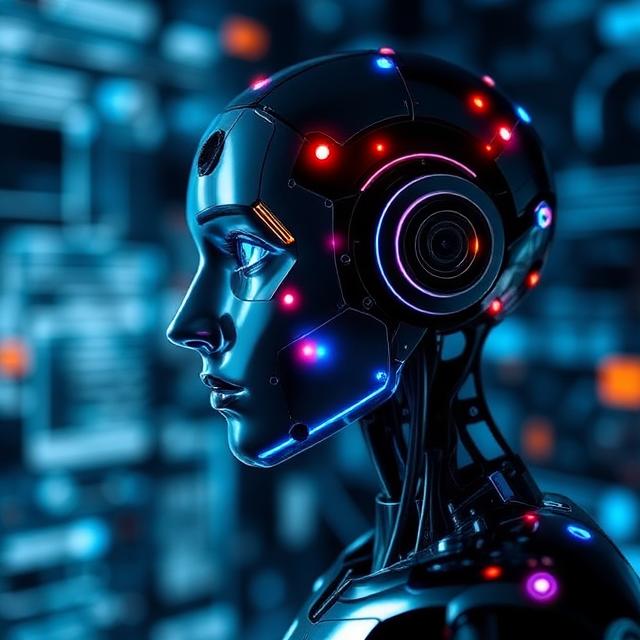
No. AI is the “brain” (software), while a Robot is the “body” (hardware). You can have AI without a robot (like a search engine), but a smart robot needs AI to function.
How can I start learning AI?
You don’t need a PhD! You can start with free resources like Google’s “Generative AI for Beginners” or explore coding through Mera Yuva Bharat (MY Bharat) which often features tech-skill workshops.