
With more and more people across India donating their time or money to various causes, this has also increased the demand for greater transparency from the NGOs.As, In recent times, many people have started questioning: What makes an NGO truly transparent? Understanding this is the first step towards making an informed and impactful contribution.
Transparency is the most critical element for trust when it comes to NGOs. Donors should be able to know what happens to their money, how the organization manages projects, and whether it is actually creating a measurable impact. Considering that the non-profit sector serves as a means through which education, healthcare, livelihood support, and rural development can all be improved, transparency in organization will help foster an established relationship between the NGO and the communities served.
Donors are also becoming more sophisticated in their expectations from donations to Ngo’s. They no longer want to donate just because the organisation made an emotional appeal, but rather they want to know that the cause for which they are donating is actually creating a meaningful impact, or not, such that they can hold the organization’s leadership accountable for those donations.
Why Transparency Matters in the NGO Sector
India’s population is immense, millions of people continue to live in poverty-related challenges such as education, nutrition, health care access, unemployment and rural development. In areas where the support and resources are limited, the need for NGOs to uplift them becomes extremely important.
According to different sources, such as several charitable and non-profit organizations that monitor donations, first-time donors’ most commonly cited reason for not donating is that they are doubtful whether their money will actually reach the intended cause and create a meaningful impact. This is why having NGOs that operate with transparency in their operations is essential.
When an organization provides its mission, programs, activities, financial information and stories of their impact transparently to the people, then likely more people will support that in the long-term
What Makes an NGO Truly Transparent? Key Signs to Look For:
The way each organization operates is unique; still, there are some characteristics that you can look for when trying to find a charitable non-profit organization in India that operates ethically and has transparency in its actions.
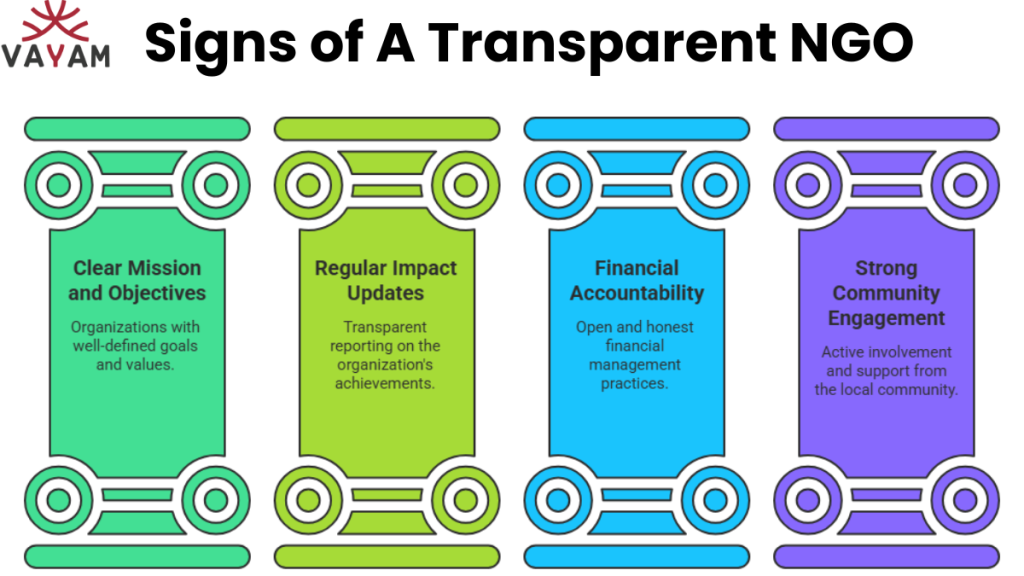
1. Clear Mission and Objectives
A credible organization will clearly state the:
- The issues they are trying to solve
- .The communities they serve
- .How will they make a positive change?
Therefore, while looking for an NGO, you should focus on the clarity of their actions rather than their unachievable generic statements.
2. Regular Impact Updates
Transparent NGOs consistently share updates about their programs, field activities, and outcomes. This may include:
- beneficiary stories,
- project reports,
- photographs from the ground,
- campaign updates,
- or annual reports.
These updates help donors understand how the initiatives are progressing and what difference is being made.
3. Financial Accountability
Transparent NGOs build trust by consistently sharing impact stories, programs and reports regularly. Examples of the reports may include:
- benefactor stories,
- field photographs,
- fundraising campaign updates,
- annual reports.
Financial reporting is generally considered to be one of the most important signs of transparency.
Trustworthy NGOs, therefore, demonstrate accountability through the publication of:
- Audited financial statements,
- The use of funds,
- The source of funding,
- And how donations were used.
Donors today appreciate NGOs that do not hide information regarding their operations but rather provide a complete understanding of how funds are provided for and utilised in community programs.
4. Strong Community Engagement
An organization that truly provides support at a community level builds strong relationships with the people it serves. Many of the successful organizations are able to help their communities by developing long-term solutions through participation, education, and sustainable programs rather than using quick fixes.
When a community is involved in its own development, it generally results in better outcomes, as the individuals living in the community will become active participants in the process of developing their own community.
Why Impact Reporting Builds Trust
Impact reporting is becoming more important in the nonprofit world. Donors are now looking beyond numbers for the tangible results of a non-profit organisation’s work.
Some examples include:
- How many children received educational assistance?
- How many women received assistance with their livelihoods?
- What villages have received access to health-related education?
- What were the long-lasting effects?
When an organization provides quantifiable data along with real stories of individuals from a community, it helps to build up its credibility and trust among its donors.
Even just minor updates about the impact can help a person feel that he or she has made a difference in the cause.
The Growing Importance of Digital Transparency
Digital transparency is a necessity, as more individuals donate via the Internet. The points that users use to assess the credibility of an NGO are as follows:
- Website credibility
- Online presence
- Visibility of projects
- Social media communication
- Accessibility of information
Building Long-Term Social Impact
Transparency is not only about financial reports or donation tracking. It is also about creating honest communication and meaningful relationships with supporters and beneficiaries.
Organizations working towards sustainable development understand that real impact takes time. Whether the focus is education, livelihood generation, women empowerment, or rural development, long-term change requires consistency, accountability, and community trust. And the NGOs that prioritize these values often create stronger and more sustainable outcomes.
How Organizations Like VAYAM Focus on Transparency
Organizations such as VAYAM continue working towards community development through education, health, livelihood support, and rural empowerment initiatives. By focusing on grassroots engagement and sustainable impact, such organizations help create meaningful change while building trust among supporters and communities.
Transparent communication, community participation, and impact-focused programs play an important role in strengthening the relationship between nonprofits and donors.
Conclusion
Choosing the right NGO is an important decision for anyone who wants to contribute to social change. Ultimately, understanding what makes an NGO truly transparent allows donors to move past emotional appeals and focus on real, measurable impact.
From financial accountability to impact reporting and community engagement, transparent NGOs help donors feel confident that their support is reaching the people who truly need it.
As awareness around social impact continues to grow in India, organizations that focus on openness, measurable outcomes, and sustainable development