
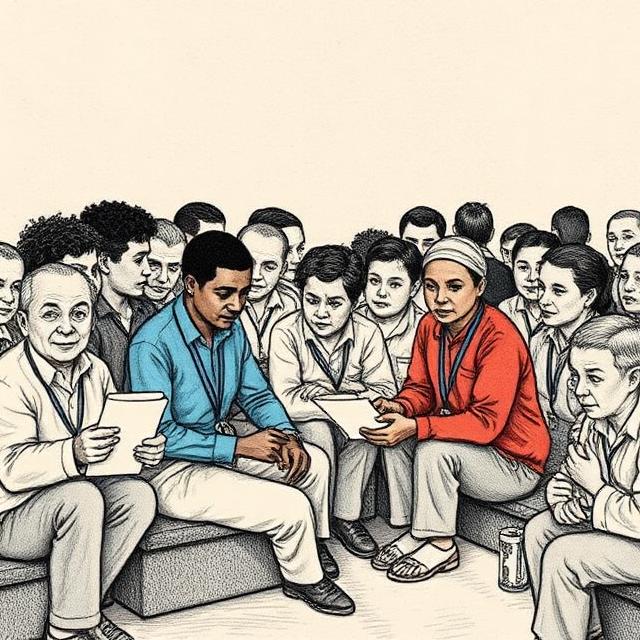
In the development sector, we often talk about “beneficiaries” and “delivery.” But at Vayam, we see things differently. We don’t see communities as passive recipients of aid; we see them as the primary architects of their own resilience.
As we move through 2026, the global conversation is dominated by AI, macro-economics, and top-down climate policy. But the real “Power Grid” of India isn’t in the cloud—it’s in the villages, the urban slums, and the tribal hamlets where collective action turns a policy into a reality.
Here is why grassroots interventions matter more than ever from the Vayam lens:
1. Moving from “Informed” to “Involved”
A top-down project “informs” a community about a new health clinic. A Vayam-led intervention “involves” them in deciding its hours, its staff, and its priorities. In 2026, the “trust deficit” in institutions is at an all-time high. The only way to rebuild that trust is through participatory governance. When a community owns a solution, they ensure it survives long after the NGO’s van has left.
2. The Context is the Solution
Policy makers in AC rooms often see a “standardised” India. But there is no “standard” village. What works for water conservation in Rajasthan will fail in Meghalaya. Grassroots interventions are the only way to apply hyper-local logic. At Vayam, we believe that the context is the solution. By empowering local leaders, we ensure that interventions are “elastic”—they bend to local needs rather than breaking under them.
3. Digitisation Must Have a Human Heart
India is digitising at a breathtaking pace, but “Digital India” risks leaving behind those without a smartphone or a signal. Grassroots interventions act as the Human Interface. We don’t just hand out tablets; we build the digital literacy and the social infrastructure that allows a woman in a remote district to claim her rights via a screen. We turn “Digital Dividends” into “Social Equity.”
4. Resilience Against the Unpredictable
From climate shocks to economic shifts, the “unpredictable” is the new normal. Large-scale government machinery is often too heavy to move quickly. Grassroots networks, however, are agile. They are the first responders who know who is most vulnerable in a flood or who has stopped coming to school. This “Social Early Warning System” is India’s greatest asset in an era of global volatility.
The Vayam Call to Action: Invest in Agency
The challenge for 2026 isn’t just “scaling up”—it’s “scaling deep.” We must move beyond counting heads to counting voices.
If we want a “Viksit Bharat” (Developed India), we cannot just build from the top. We must nourish the roots. Because when the roots are strong, the tree doesn’t just grow—it survives the storm.