
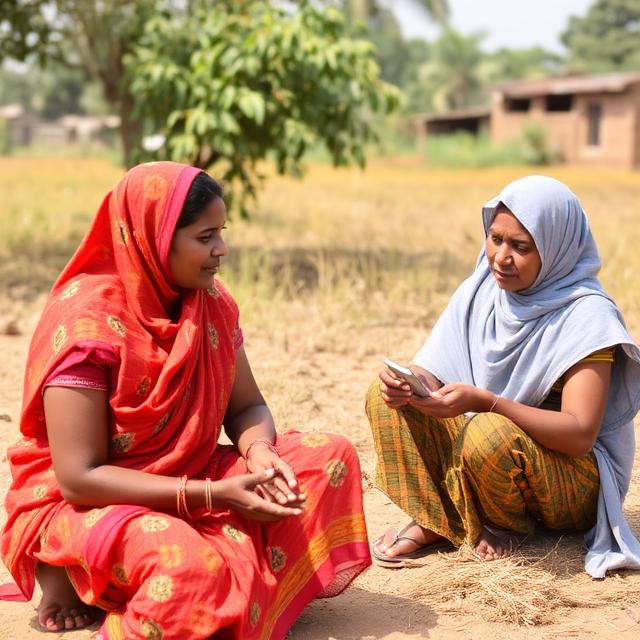
In the traditional landscape of rural India, Self-Help Groups (SHGs) have long been the engines of micro-credit and social support. But as we move through 2026, a new member has joined these circles: Artificial Intelligence. From the “Lakhpati Didi” initiative to high-tech immersion programs, AI is helping rural women transition from subsistence livelihoods to scalable digital enterprises.
At Vayam, we see this shift not as a replacement of community bonds, but as a digital amplification of collective power.
1. The “Sakhi” Revolution: AI as a Business Partner
The India AI Impact Summit 2026 recently showcased the Tata AI Sakhi Immersion Program, where over 1,500 rural women performed thousands of AI-powered tasks on their smartphones. This isn’t science fiction; it’s the new operational reality for SHGs.
- Design & Creativity: Artisans practicing Madhubani or Pattachitra are using GenAI to generate new design motifs and color palettes, blending traditional heritage with modern market trends.
- Marketing at Scale: AI tools now help SHG members create professional product photos and social media catalogs in seconds, removing the need for expensive photography or graphic design services.
- Business Communication: Using voice-to-text AI, a woman in a remote village can draft professional business inquiries or grant applications in formal English or Hindi, even if her primary language is a local dialect like Santhali or Gondi.
2. The Path to “Lakhpati Didi”: 6 Crore Success Stories
The government’s ambitious goal to create 6 crore Lakhpati Didis (women earning over ₹1 lakh annually) by 2029 is being supercharged by the Digital Aajeevika Register.
- Predictive Financial Planning: AI-driven tools help SHGs move beyond manual record-keeping. They analyze group savings and repayment patterns to predict credit needs and identify members ready for larger enterprise loans.
- Smart Agriculture & Natural Farming: AI is guiding “Lakhpati Didis” in the transition to regenerative agriculture by providing real-time data on soil health and pest alerts, ensuring higher yields with lower input costs.
3. Overcoming the “Triple Barrier”
For rural women, the digital divide is often three-fold: Device, Dialect, and Doubt. Inclusive AI is dismantling these barriers:
| Barrier | AI-Led Solution |
| Literacy | Voice-First Interfaces: Platforms like Bhashini allow women to “talk” to their apps, bypassing the need to type or read complex menus. |
| Language | Real-time Translation: AI translates government scheme documents and market price lists into 22+ local languages instantly. |
| Confidence | High-Touch Mentorship: Programs like She Leads Bharat provide AI training directly on the Meri Saheli App, turning the smartphone into a trusted advisor. |
4. Beyond Finance: AI for Social Impact
Digital inclusion for SHGs extends into health and governance. The Suman Sakhi WhatsApp Chatbot, for instance, uses AI to provide rural families with maternal and newborn health info, proving that the same technology driving business can also save lives.
“The real test of AI is not in the labs of Bengaluru, but in the hands of a ‘Didi’ in a village who uses it to double her income and lead her community.”
Conclusion: The Future is Shakti-Driven
At Vayam, we believe the marriage of SHG solidarity and AI intelligence is the most potent tool for rural transformation. By 2026, the “Digital Divide” is being replaced by a “Digital Ladder,” and it is the women of rural India who are climbing it fastest.