
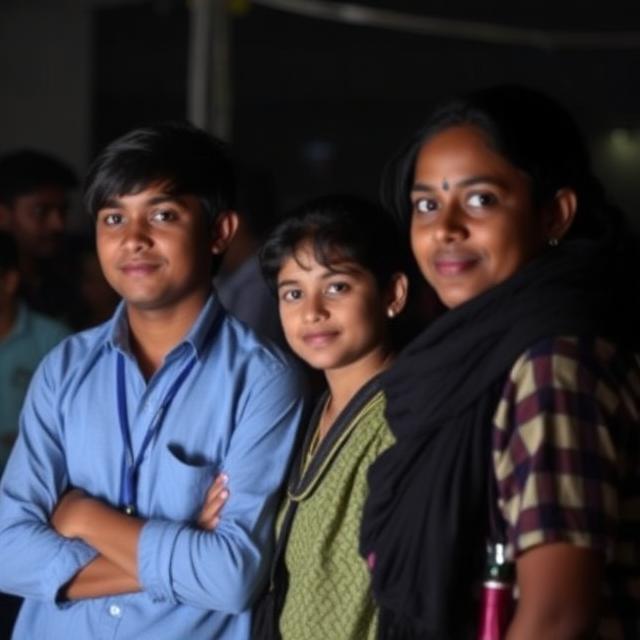
For generations, the story of development in India was written in city centers and delivered to the “periphery.” Expertise flowed from the top down, and solutions were designed for rural communities by people who had never spent a night in one. But a quiet, tectonic shift is occurring. The “Frontline” is no longer just a destination for service; it is becoming the headquarters of innovation.
Today, the most potent solutions to India’s existential challenges—climate change, learning poverty, and healthcare access—are being authored by the youth living within those very systems. This is the rise of the “Insider-Innovator,” a generation that refuses to be a bystander in its own development story.
The Power of Proximity
Why does it matter if a solution comes “from within”? In the world of social impact, there is a massive difference between Academic Knowledge and Lived Experience.
- The Outsider’s View: Sees a “water crisis” as a lack of pipes and pumps.
- The Insider’s View: Understands that the water crisis is actually a complex web of caste dynamics, electricity timing, and traditional harvesting wisdom that has been ignored.
When youth from Tier 2 and Tier 3 cities lead the charge, they bring Contextual Intelligence. They don’t just solve the problem; they navigate the social friction that usually kills “expert” projects.
Three Frontiers of Youth-Led Change
1. The Green Revolution 2.0 (Climate & Agri)
While global summits discuss carbon credits, India’s rural youth are tackling climate change where it hits hardest: the farm. We are seeing a surge in “Agri-preneurs” who are:
- Using drone technology for precision pesticide application to save soil health.
- Reviving ancient millets and drought-resistant seeds through digital community seed banks.
- Building decentralized solar cold-storage units to prevent the 30% post-harvest loss that keeps farmers in debt.
2. EdTech Beyond the Screen (Learning & Agency)
The “Foundational Literacy” crisis in India isn’t just about a lack of tablets. It’s about engagement. Youth leaders in states like Bihar and Uttar Pradesh are moving beyond “screen time” to create Hybrid Learning Hubs. They are translating complex AI concepts into local dialects and using street theater and community radio to teach digital safety. They aren’t just “skilling” their peers; they are building their agency to navigate the future.
3. Last-Mile Health Sovereignty
The pandemic showed us that the “Frontline” is the only line that matters. Young community health workers are now using AI-assisted diagnostic tools to identify tuberculosis or high-risk pregnancies in remote hamlets. By integrating modern tech with the trust they already hold in their villages, they are closing the gap that the formal “hospital system” could never bridge.
The “Multiplier” Framework of Youth Leadership
When youth solve problems from within, the impact isn’t linear; it’s exponential. We can visualize this through the Leadership Multiplier Effect:
- Level 1 (Direct Impact): The problem (e.g., waste management) is solved in one village.
- Level 2 (Inspiration): Five neighboring villages see the success and replicate the model using their own resources.
- Level 3 (Systemic Shift): The local government adopts the youth-led model as official policy for the entire district.
The “Insider” doesn’t just fix a leak; they change the way the community perceives its own power.
The Infrastructure of Support: What Do They Need?
If the youth are already at the frontline, why hasn’t every problem been solved? Because “Agency” needs “Infrastructure.” To move from individual sparks of brilliance to a national flame, we must provide:
- Patient Capital: Traditional VC wants 10x returns in three years. Social “Builders” need capital that understands the J-curve of systemic change.
- Mentorship, Not Instruction: Youth don’t need to be told what to do; they need “navigational support” on how to scale, how to manage finances, and how to interface with the state.
- Digital Commons: Access to high-speed internet and open-source data is the “electricity” of the 21st-century frontline.
Conclusion: 2047 is an “Inside Job”
The vision of a Viksit Bharat (Developed India) by 2047 will not be achieved through a series of successful “projects” funded from abroad. It will be achieved when millions of young Indians—the “Builders” on the frontline—decide that they are the most qualified people to solve the problems of their own doorsteps.
We must stop looking for heroes in capes and start looking for them in the classrooms of Khoda, the fields of Vidarbha, and the startups of Noida. The frontline is calling, and for the first time in history, the people answering the call are already standing there.